
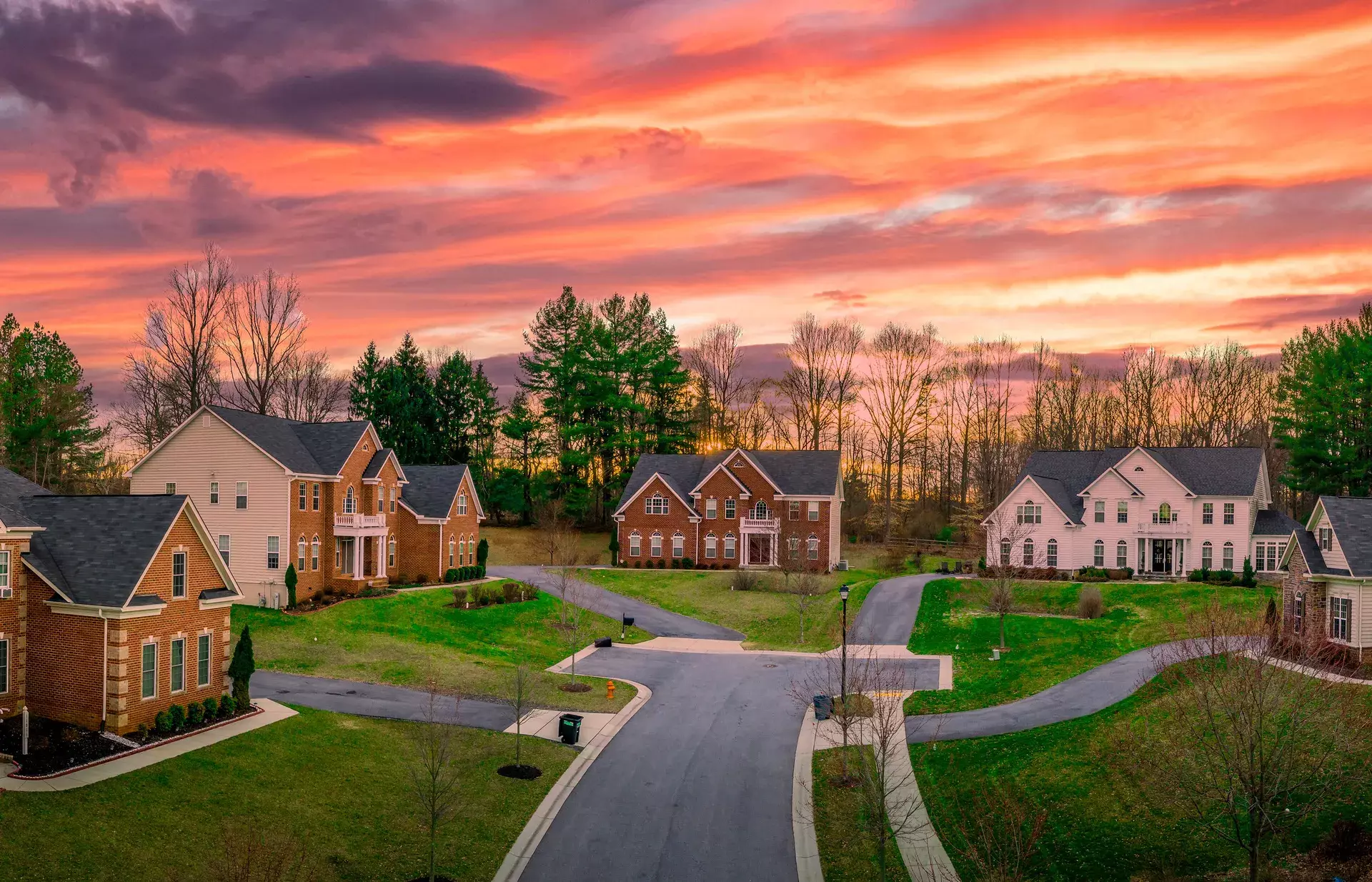
The Michigan Housing Market, Read by an Agent Who Works It
The Michigan Housing Market, Read by an Agent Who Works It
What the headline numbers miss in Livingston, western Oakland, and northern Washtenaw counties
There is no single Michigan housing market right now, and that is the part the statewide averages hide. A home that is well prepared, priced to current conditions, and free of significant objections can go under contract in under a week. A home that misses on any one of those can sit for months. Both outcomes are happening on the same street, in the same price range, in the same month. Averaging them together produces a number that describes neither. This page explains how that split works, what it means for pricing and negotiation, and where the current data actually sits. Derek Bauer has worked this corridor full time for 24 years across more than 1,100 closed transactions.
What the Headline Numbers Miss
In July 2026, Zillow reported a median of 6 days to pending for both Brighton and Howell. Read alone, that number describes a market where nearly everything moves immediately. It does not.
Median days to pending measures only the homes that went under contract. It says nothing about the inventory still sitting. The Real Estate One Greater Washtenaw report for the same period puts the gap in plain terms: homes that went pending in July had been listed 37 days, while the average unsold active listing had already been on the market 68 days. Those two figures describe the same market at the same moment.
What this looks like in practice: a well presented home priced to the live competition can draw multiple offers in its first weekend. A home that is modestly overpriced, dated, or carries an unresolved objection gets skipped by the same buyers, in the same week, at the same price point.
Why the First Two Weeks Decide the Outcome
The old advice was to try a price and see what happens, then adjust at 45 or 60 days if nothing moved. That advice has become expensive.
A listing gets its largest audience in its first 7 to 14 days. Every buyer already searching that price range and area sees it during that window. If it does not draw traction then, the question buyers start asking is not whether the price is right. It is what is wrong with the house. Recovering from that is harder than pricing correctly at the outset, because the second look never carries the urgency of the first.
The reduction conversation has moved up accordingly. Derek now raises it after the second or third weekend rather than waiting out a two-month listing period. The market-wide data reflects the same pattern. Realtor.com reported that in July 2026 roughly 19 percent of active listings across the Detroit metro area carried a price reduction, close to one in five, up about 1.5 percentage points from a year earlier.
What that means if you are preparing to list:
- Condition work, staging, and photography need to be finished before the listing goes live, not added in week three
- The launch price carries more weight than the list-to-sale negotiation that follows it
- A reduction planned in advance for day 14 is a strategy; a reduction forced at day 60 is a rescue
- Access restrictions during the opening window cost more than they used to
Start a Seller Discovery Session →
Where Buyers Have Leverage and Where They Do Not
Concessions have returned in a meaningful way, but not evenly. Leverage in this market tracks accumulated market time almost exactly.
A fresh listing that draws competition still gets clean contracts. Once a property has been sitting, buyers grow comfortable asking for closing cost assistance, repair credits, or rate buydown money, and they are far less willing to overlook condition issues on the grounds that inventory is scarce. That last part is a real change from a few years ago.
Appraisal gap language has moved the same direction. Coverage still appears when a home generates genuine competition and a buyer needs to separate their offer from several others. It is no longer something to assume on an ordinary listing. Between higher payments and the cash already required at closing, buyers are protecting liquidity, and large open-ended appraisal guarantees have narrowed to the situations that actually demand them.
Michigan Housing Market Conditions: 2026 Update
Figures in this section are current as of September 2026 and are updated annually. Every source is named so you can verify it directly.
Mortgage rates. Freddie Mac's Primary Mortgage Market Survey put the 30-year fixed rate at 6.66 percent as of August 27, 2026, up slightly from 6.65 percent the prior week and above the 6.56 percent recorded a year earlier. Rates sitting near a one-year high, rather than easing as forecasters projected in January, is the central context for everything else on this page.
Buyer activity. New pending sales across Southeast Michigan fell from 4,379 in June 2026 to 3,867 in July, a decline of about 12 percent. Livingston County moved from 266 to 237 over the same period, down about 11 percent. Some of that is ordinary summer seasonality and should not be read entirely as a rate effect.
Livingston County, year to date through July 31, 2026. Closed sales were essentially flat against 2025, 1,140 against 1,137. Average sale price rose about 1 percent, from $474,729 to $478,894. Those two figures alone would suggest a market standing still. The price tiers say otherwise:
- New pendings above $500,000 rose from 382 to 445, an increase of about 16 percent
- New pendings below $300,000 fell from 227 to 199, a decline of about 12 percent
Property tax cap. The Michigan State Tax Commission set the inflation rate multiplier for the 2026 tax year at 1.027, a 2.7 percent cap on how far taxable value can rise on a property that has not changed hands. The figure for 2027 is generally published in mid to late October.
Sources: Zillow housing market data, July 2026. Realtor.com, July 2026 housing market data. Realcomp MLS using Great Lakes Repository Data, as reported by Real Estate One, August 2026, including the Greater Washtenaw Region and Livingston County housing reports. Freddie Mac Primary Mortgage Market Survey, August 27, 2026. Michigan State Tax Commission Bulletin 14 of 2025.
How to Price a Home in a Split Market
When a market rewards correct pricing and punishes optimistic pricing this sharply, the method behind the number matters more than it does in a forgiving market.
Derek's pricing process, called the Bauer Pricing Strategy, combines a full Realcomp MLS read - active competition, recent closed sales, pending sales, and failed-to-sell listings - with the primary pricing anchor on live active inventory rather than older closed sales alone. Closed sales tell you where the market was when those contracts were written, which in a shifting market can be three to six months behind. Active competition tells you what your buyer is comparing your home against this weekend.
The failed-to-sell listings carry information the other categories do not. They mark the prices this market has already rejected. In a period where roughly one in five active listings across the metro area is carrying a reduction, knowing where the ceiling actually sits is worth more than another closed comparable.
That method is the reason Derek has sustained a 99.08 percent lifetime list-to-sale price ratio across more than 1,100 transactions and $225 million in closed volume.
Request a Bauer Pricing Strategy Review →
Where This Read Comes From
Statewide figures are useful context and nothing more. Michigan contains markets that behave nothing alike, and no agent works all of them.
Derek's firsthand authority is the corridor running from Livingston County through western Oakland and northern Washtenaw counties: Brighton, Howell, South Lyon, Hartland, Milford, Pinckney, and the surrounding communities. In the western Metro Detroit markets where he does the majority of his business, the observations on this page come from listings he has taken, offers he has negotiated, and reductions he has recommended. Outside that corridor, treat the statewide data as data and find someone who works that market daily.
If you are buying rather than selling, the same split shows up in what reaches you and how fast. Derek's home search platform sends listings as they hit the market rather than after a portal has aged them, which matters when a well priced home goes under contract in under a week.
Property Taxes and Your Carrying Cost
Property taxes belong in any honest market outlook, because in Michigan they change when a home transfers. A buyer who budgets from the seller's current tax bill is budgeting from the one figure that will not apply to them. Taxable value uncaps in the year following a transfer, and the increase can be substantial.
Rather than summarize that here, the mechanics are covered in full across a dedicated set of pages:
- Michigan Property Tax Estimator - run the numbers for a specific jurisdiction
- Michigan Property Tax Uncapping Explained - what happens when a home transfers
- Michigan Principal Residence Exemption - the 18-mill question
- Property Tax Proration at Closing - how the bill is split
- Livingston County Property Tax Rates and Millage - rates by taxing unit
Frequently Asked Questions
Is the Michigan housing market slowing down?
It depends entirely on which part of it you mean, which is the central point of this page. Through July 2026, Livingston County closed sales were essentially flat year over year and average sale price rose about 1 percent. Underneath that, new pendings above $500,000 rose about 16 percent while pendings below $300,000 fell about 12 percent. Different price tiers are moving in opposite directions at the same time.
How long does it take to sell a home in Brighton or Howell?
Zillow reported a median of 6 days to pending for both Brighton and Howell in July 2026. That figure counts only homes that went under contract. Over the same period in the neighboring Washtenaw market, the average unsold active listing had been on the market 68 days. A well prepared, correctly priced home can go under contract in under a week. A home that misses on preparation or price can sit far longer than the median suggests.
Should I wait for mortgage rates to come down before buying or selling?
Forecasts have not been a reliable basis for that decision. Projections published in January 2026 called for rates in the high 5 to low 6 percent range by late in the year. Freddie Mac's survey instead put the 30-year fixed at 6.66 percent as of August 27, 2026, higher than a year earlier. Planning around a conservative current number, rather than a predicted future one, has proven more durable.
How quickly should I reduce the price if my home is not selling?
Sooner than the long-standing advice suggested. A listing draws its largest audience in the first 7 to 14 days. If it does not gain traction in that window, buyers begin looking for a reason. Roughly 19 percent of active listings across the Detroit metro area carried a price reduction in July 2026. A reduction planned in advance is a strategy; one forced after two months is a rescue.
Are sellers paying concessions in Southeast Michigan right now?
Frequently, but not universally, and the pattern is predictable. Concession requests track accumulated market time. A fresh listing that draws competition still receives clean offers. Once a property has been sitting, buyers are far more willing to ask for closing cost assistance, repair credits, or rate buydown money, and less willing to overlook condition issues.
Why do my property taxes go up after I buy a home in Michigan?
Taxable value uncaps in the year following a transfer of ownership. While a home is owned continuously, annual growth in taxable value is limited by the state inflation rate multiplier, set at 1.027 for the 2026 tax year, a 2.7 percent cap. That cap does not carry over to a new owner. Budget from the current State Equalized Value or from half the purchase price, whichever is higher, and never from the seller's capped taxable value.
Archived Briefing: January 2026
Derek recorded a 35-minute on-demand market briefing in January 2026. It is retained here as a record of how the year was expected to unfold. Several of its rate projections did not hold, which is itself worth watching. The current conditions section above supersedes it.
Connect With Derek
Whether you are weighing a move, preparing to list, or trying to make sense of conflicting market headlines, Derek welcomes a direct, confidential conversation.
Derek Bauer
Associate Broker, REALTOR® | Real Estate One
Certified Residential Specialist - CRS
565 E. Grand River Ave., Brighton, MI 48116
Broker compensation is not set by law and is fully negotiable. All compensation is determined through negotiation between the parties. The information on this page is provided for general informational purposes only and does not constitute professional real estate, legal, financial, or tax advice. Market conditions vary and individual results may differ. Market statistics are attributed to their original sources and are current as of the dates shown. Derek Bauer is a licensed Michigan Associate Broker (License #6506038159) operating under Real Estate One, 565 E. Grand River Ave., Brighton, MI 48116. Equal Housing Opportunity.

Connect